What is the difference between them?
Safety-sensitive positions are jobs where someone’s actions, decisions or inattention could result in serious harm or incident. These roles typically involve operating vehicles or equipment, working in hazardous environments, or performing duties where safety is critical.
Non-safety-sensitive positions, while still important to an organization’s success, do not present a direct or immediate risk to safety if an error occurs. These roles usually involve administrative, support or office-based responsibilities.
Understanding this distinction helps organizations apply appropriate safety standards, ensure compliance, and maintain a safe and productive workplace for everyone.
Their connection to substance use in the workplace
We conducted a national study to learn more about employee and employer substance use behaviours, policies, practices and experiences across various sectors and industries. As part of the study, we included people employed in safety-sensitive and non-safety sensitive positions within the oil and gas, construction, mining and forestry industries.
How did the study work?
The study involved a survey, focus groups and interviews with workers and managers from the various industries.
Overall, we surveyed 1,120 people spanning five regions in Canada: The Atlantic provinces (7%), Quebec (30%), Ontario (34%), the Prairies (16%) and British Columbia (13%, including the Yukon and Northwest Territories, due to small numbers there).
We additionally conducted focus groups with 130 people working in these industries and interviewed 16 people with lived and living experience of substance use issues.
The results of the study were captured in the Workplaces and Substance Use infographic series. They were broken down by different topics and how they related to employees in different roles or industries.
Workplaces and Substance Use infographic series
Safety-Sensitive Positions
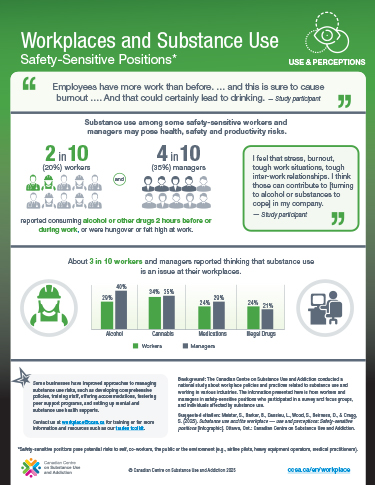
Workplaces and Substance Use: Safety-Sensitive Positions – Use and Perceptions
Illustrates key context and data on use and perception related to substance use by individuals...
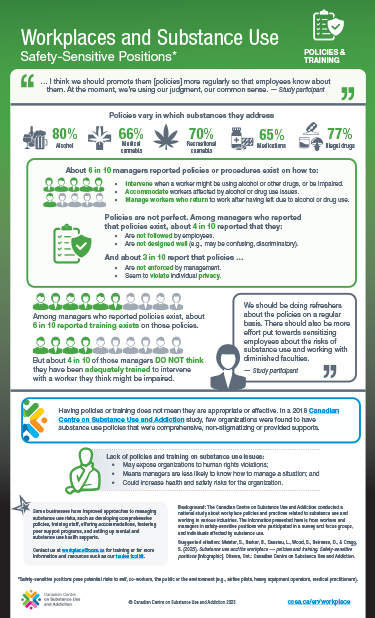
Workplaces and Substance Use: Safety-Sensitive Positions – Policies and Training
Illustrates key context and data on policies and training related to substance use by...
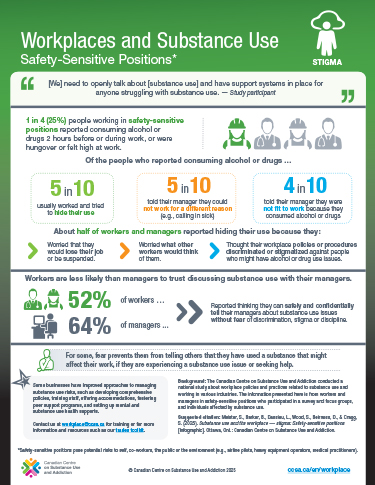
Workplaces and Substance Use: Safety-Sensitive Positions – Stigma
Illustrates key context and data on stigma related to substance use by individuals in...
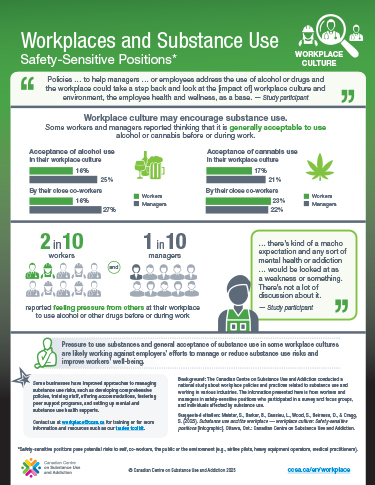
Workplaces and Substance Use: Safety-Sensitive Positions – Workplace Culture
Illustrates key context and data on workplace culture related to substance use by individuals in...
Workplaces and Substance Use: Safety-Sensitive Positions
Provides key context, data, and recommendations on improving the substance use health of...
Non–Safety-Sensitive Positions
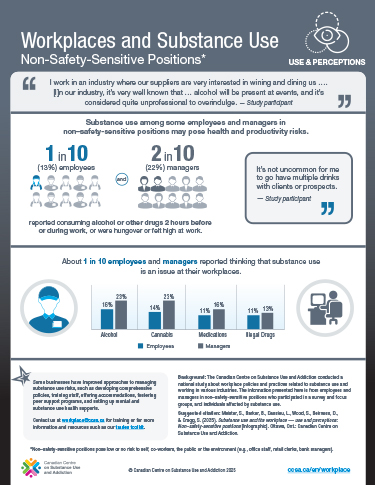
Workplaces and Substance Use: Non–Safety-Sensitive Positions – Use and Perceptions
Illustrates key context and data on use and perceptions related to substance use by individuals...
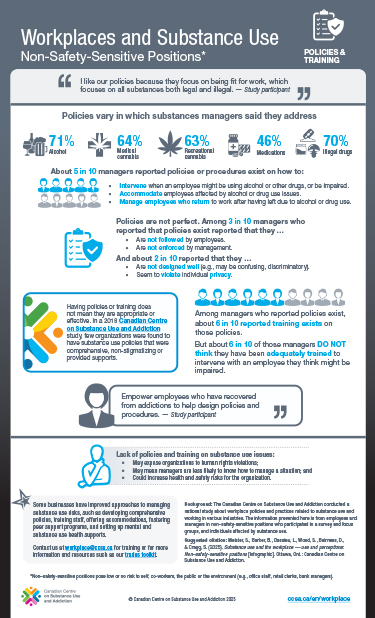
Workplaces and Substance Use: Non–Safety-Sensitive Positions – Policies and Training
Illustrates key context and data on policies and training related to substance use by...
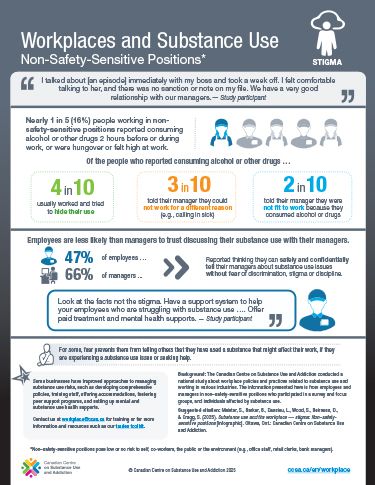
Workplaces and Substance Use: Non–Safety-Sensitive Positions – Stigma
Illustrates key context and data on policies and training related to substance use by...
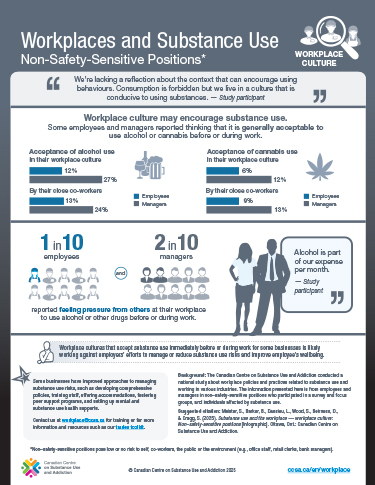
Workplaces and Substance Use: Non–Safety-Sensitive Positions – Workplace Culture
Illustrates key context and data on workplace culture related to substance use by individuals in...
Workplaces and Substance Use: Non-Safety-Sensitive Positions
Provides key context, data, and recommendations on improving the substance use health of...
Heading
Contact an Expert
Heading
Keep informed with CCSA News Digest, the CCENDU newsletter, alerts, and bulletins
Heading
Explore CCSA’s Guidance, Tools and Resources
All our research-based publications, tools and resources are divided into six different categories of interest. They support evidence-based decision-making on substance use health issues. Select your area of interest from the choices below:
Heading
Substances
Delve into key resources on commonly used substances, such as alcohol, cannabis, opioids, stimulants and psychedelics.
Heading
Personal and Societal Impacts
Get insights on the personal and societal impacts of substance use and addiction , including gambling and impaired driving, and their effects on health, safety, and social well-being.
Heading
Communities
Communities share common interests, values or goals, and interact with one another to build relationships and help networks. These materials support more inclusive, equitable, and community-informed responses to substance use and addiction.
Heading
Treatment and Prevention
Explore medical, psychological, and social approaches aimed at helping individuals avoid or recover from substance use disorders.
Heading
Youth
Learn about factors influencing substance use in young people, including childhood trauma and brain development, and get tools to support adult allies in leading meaningful, evidence-informed conversations with youth.
Heading
Substance Use and the Workplace
Substance use has a significant impact on the workplace, potentially affecting safety, productivity and employee well-being. Explore research on substance use in various industries.